College Football Overtime Rules: A Simple and Complete Guide for Fans
College football overtime rules often confuse new fans and even experienced viewers. Games can end differently than NFL matchups, which surprises many people. This guide explains college football overtime rules in clear, simple language. You will understand how overtime works, why it changed, and what to expect in close games.
College football overtime is designed to create fair chances for both teams. Each team gets the ball in scoring position. That alone makes it exciting. Over the years, the NCAA updated these rules to improve safety and speed. These changes also increased drama and strategy.
I have watched countless overtime games, from regular season thrillers to bowl classics. Some ended fast. Others turned into unforgettable marathons. Once you understand the rules, every overtime snap feels even more intense.
This article covers history, formats, scoring, rule changes, and real examples. By the end, you will feel confident explaining overtime to anyone watching with you.
What Are College Football Overtime Rules?
College football overtime rules explain what happens when a game ends tied after regulation. Unlike the NFL, college football guarantees both teams a chance to score. This makes outcomes feel more balanced and competitive.
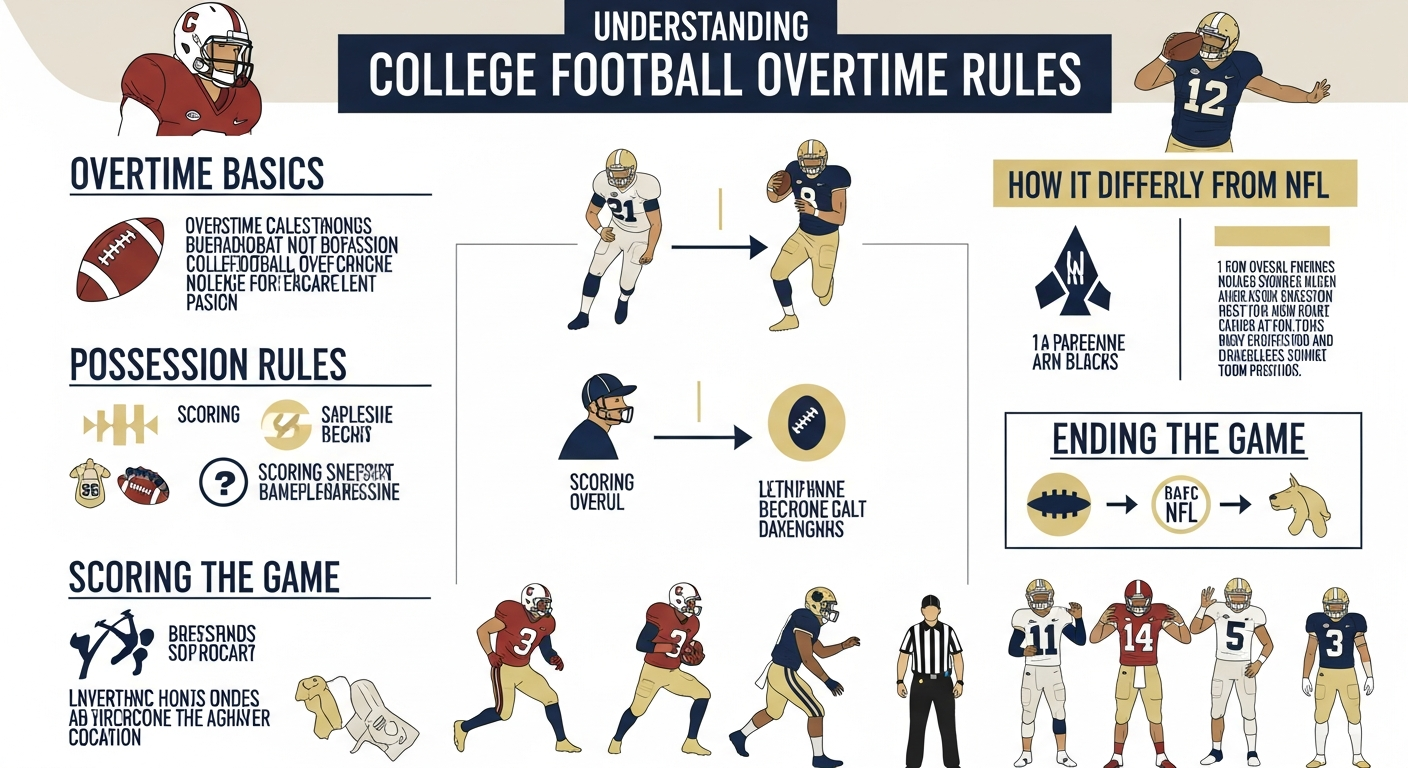
Each team starts with the ball at the opponent’s 25-yard line. This field position gives immediate scoring chances. Teams take turns playing offense and defense. An overtime period is called a possession for each team.
If one team scores more points than the other in the same overtime round, the game ends. If the score remains tied, another overtime begins. This process continues until a winner is decided.
These rules focus on fairness and excitement. Fans love the fast pace. Coaches must think quickly. Players feel pressure instantly. That mix makes college football overtime special and unforgettable.
Why College Football Overtime Is Different from the NFL
College football overtime rules differ greatly from NFL overtime rules. The biggest difference is possession fairness. In college football, both teams always get the ball.
In the NFL, the game can end if the first team scores a touchdown. That often feels unfair to fans. College football avoids this issue completely.
Another key difference is starting position. College football starts at the 25-yard line. The NFL begins with a kickoff. College overtime games also tend to be shorter but more intense.
These differences make college football overtime rules more exciting for viewers. Every play matters immediately. There is no waiting for momentum to build. The drama starts right away.
How a College Football Overtime Period Works
Each overtime period follows a simple structure. Teams alternate possessions. One team plays offense first. The other team responds.
Both teams get equal chances from the same field position. After one possession each, the scores are compared. If one team leads, the game ends.
If the score stays tied, another overtime begins. Starting with the third overtime, teams must attempt two-point conversions after touchdowns. From the fifth overtime on, teams alternate only two-point attempts.
These college football overtime rules create quick endings while keeping fairness intact.
Scoring Rules During College Football Overtime
Scoring during overtime follows standard football rules. Touchdowns count as six points. Field goals count as three points. Extra points are allowed early.
However, college football overtime rules add restrictions later. Starting in the third overtime, teams must attempt a two-point conversion after a touchdown.
This rule increases risk and excitement. Coaches must decide whether to run or pass. One mistake can end the game.
These scoring changes prevent extremely long games. They also protect player safety while keeping fans engaged.
The Two-Point Conversion Shootout Explained
One of the biggest changes in college football overtime rules came in 2021. Starting in the fifth overtime, teams no longer run full drives.
Instead, they alternate two-point conversion attempts. This format feels like a shootout. Each team gets one play per round.
If one team scores and the other fails, the game ends. This continues until a winner is decided.
I have seen games end in seconds after lasting hours. This rule adds drama but also reduces player fatigue. It balances excitement and safety very well.
Why the NCAA Changed College Football Overtime Rules
The NCAA changed overtime rules mainly for safety reasons. Long games increase injury risk. Players get tired. Mistakes happen more often.
Some games lasted over four hours. That raised concerns among coaches and medical experts. The NCAA responded with new limits.
The updated college football overtime rules shorten games without removing fairness. The two-point shootout ends games faster. It also adds strategy and pressure.
These changes show the NCAA adapting to modern football demands.
Strategy Differences in College Football Overtime
Overtime strategy differs greatly from regular play. Coaches must think short-term. Every play matters more.
Some teams prefer field goals first. Others push for touchdowns. Defensive play calling also changes. Aggressive blitzes become common.
College football overtime rules reward preparation. Teams that practice red-zone offense often succeed. Mental toughness also matters.
I have seen underdogs win because they stayed calm. Overtime tests coaching, players, and teamwork equally.
Regular Season vs Bowl Game Overtime Rules
Most college football overtime rules apply equally to regular season and bowl games. However, intensity feels higher in postseason games.
Bowl games often feature unfamiliar opponents. Preparation time varies. That adds unpredictability.
Championship stakes also change strategy. Coaches may take bigger risks. Players push harder.
Despite the pressure, the rules stay consistent. That consistency helps maintain fairness across all games.
Common Misunderstandings About College Football Overtime
Many fans think overtime has a time limit. It does not. The game continues until a winner is decided.
Another myth is that teams must score touchdowns. Field goals still matter early.
Some believe coin toss winners always win. That is not true. Defense and execution decide outcomes.
Understanding college football overtime rules helps fans enjoy games without confusion or frustration.
Real Examples of Memorable College Football Overtime Games
Some of the greatest college games ended in overtime. The 2018 LSU vs Texas A&M game lasted seven overtimes. It became legendary.
That game influenced rule changes. Player exhaustion was obvious. Fans loved it, but safety concerns followed.
Another example is the Rose Bowl classics. Many ended with dramatic overtime moments.
These games show why college football overtime rules matter. They shape history and unforgettable memories.
How Overtime Rules Impact Rankings and Playoffs
Overtime results affect rankings and playoff chances. A win is still a win, even in overtime.
However, close overtime games can influence perception. Committees may evaluate performance quality.
College football overtime rules ensure winners are clear. That clarity helps rankings stay fair.
Every overtime snap can impact a team’s season destiny.
FAQs
How many overtimes can a college football game have?
There is no limit. The game continues until one team wins.
Do both teams always get the ball?
Yes. College football overtime rules guarantee equal possessions.
When do two-point conversions become mandatory?
Starting in the third overtime after touchdowns.
What happens in the fifth overtime?
Teams alternate only two-point conversion attempts.
Are overtime rules the same for playoffs?
Yes. The same NCAA rules apply.
Why doesn’t college football use NFL overtime rules?
College rules focus on fairness and guaranteed possessions.
Conclusion
College football overtime rules create fairness, excitement, and unforgettable moments. They give both teams equal chances and keep fans engaged until the end.
Understanding these rules helps you enjoy games more deeply. You can follow strategy, predict decisions, and appreciate coaching brilliance.
The NCAA continues improving overtime to protect players and enhance entertainment. These rules balance tradition with modern needs.
Next time a game goes into overtime, you will know exactly what is happening. That knowledge turns stress into excitement. Stay curious, keep watching, and enjoy every snap of college football overtime.